"Sure as God's vengeance, they're comin" - Ben Wade
"All a man's ways seem right to him, but the Lord weighs the heart" - Ben Wade quoting Proverbs 21:2.
 Christianity Today recently reviewed the religious and moral aspects of James Mangold's new movie '3:10 to Yuma'. The review states in part:
'3:10 To Yuma' is a very modern western. This is a film that strives for and achieves a deeper inquiry into moral psychology. On one level it's about gunfights, spurs, and saloon showdowns, but on another it's a film about the fuzzy lines between right, wrong, and the law in an altogether lawless frontier land.
Director James Mangold deals with the personal quest for honor and redemption. Dan Evans is down on his luck, about to lose his ranch to the Southern Pacific suits who are bringing the railroad to the tiny town of Bisbee. Seeking to redeem himself financially and in the eyes of his adolescent son Will Evans stumbles upon a major chance to prove himself. The notorious outlaw, Ben Wade has just been captured. Hoping to rid the region once and for all of this infamous scourge to the railroad's safety, a Southern Pacific businessman offers to handsomely reward any man who will join the posse to safely transport Wade to prison. Evans jumps at the opportunity, but the task is easier said than done. It's a three-day journey to the town of Contention, where Wade is to be put on the 3:10 train to the Federal Court in Yuma. And it promises to be a perilous journey fraught with hostile Indians, railroad ruffians, as well as the violent gang of outlaws determined to free their leader, Wade, before he is put on the train to Yuma.
As the fateful journey plays out, bullets fly and blood is spilt. The posse finds Wade to be deadly even when bound and gun-less. As the body count grows Evans becomes determined
 to be the last man standing with Wade—the man who successfully delivers the criminal to the law in Yuma.
Wade seems to respect Evans as a morally upright family man driven only by a desire to protect his land and dignity. Likewise, Evans seems uninterested in destroying Wade. If not for the circumstances of their meeting, they might have been friends. Ben Wade is a self-described rotten-to-the-core villain who is as enchanted with his own mythology as everyone else is fearful of it. He is a holster-bearing Hannibal Lecter—minus the cannibalism. Like Lecter, Wade works on his victims primarily psychologically. He's deadly with his gun ("the hand of God"), but his words are even deadlier.
Like many of cinema's most psychologically toxic antagonists, Wade is well read and adroit at quoting Bible verses to tease his foes. Apparently he read the Bible cover to cover only once but he quotes it like a preacher. His motto seems to be Proverbs 21:2: "All a man's ways seem right to him, but the Lord weighs the heart." Wade takes from this verse a twisted justification for his own wayward actions—apparently believing that since God is ultimately the only judge of right and wrong, man has no mandate but to do what is right in his own eyes.
 Wade's odd brand of moral relativism makes him an interesting character—especially in the film's final moments, when his mythologized shell begins to crack. Evans' motivations become more ambiguous as the film goes on. Is it really about the reward money or serving justice? Or is it a pride issue? Some deeper psychological drive that makes him in the end not all that different from Wade? As he is forced to kill dozens of people and put his own family in grave danger, these questions become ever more pertinent. At what point does proving your honor become secondary to protecting yourself and the lives of your loved ones?
Much of the tension of the film comes from what we know is coming at 3:10. As the train's arrival becomes imminent, so too does the dread of an unavoidably nasty fight. Wade's gang catches up to Evans's posse in Contention and their second-in-command leader, Charlie Prince, unleashes a ruthless wrath. Prince, who is really the worst scoundrel in the bunch is a deliciously wicked character who steals most of the scenes he's in. Foster really captures the soulless, unruly spirit of the western outlaw.
Yuma portrays a West that is stark, barren, and morally ambiguous … very few characters are all good or all bad … everyone is a mixture (just as Evans and Wade are, in a way, two sides of the same coin) and everyone has an opportunity to change, to redeem whatever rotten past they came from.
Was Proverbs used as the motif in '3:10 To Yuma'?
Posted September 15, 2007


 Mark Lilla, professor of the humanities at Columbia University, wrote an essay in the NY times entitled
 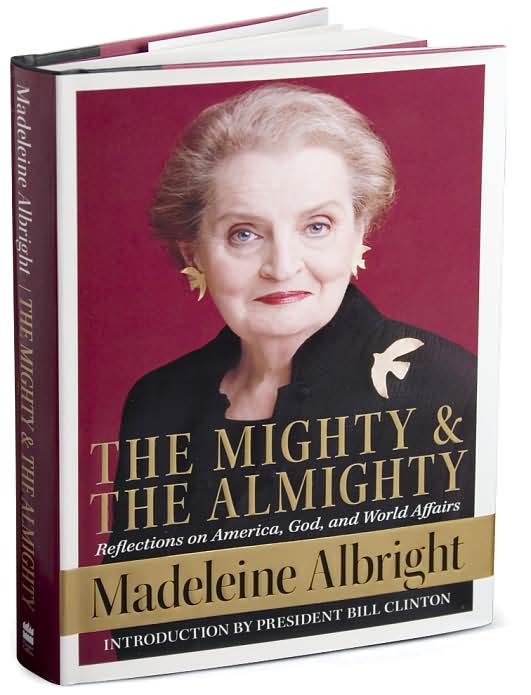 a recent
  In the August 14, 2007 Science section of the NY Times Jane E. Brody writes about “Thriving After Life’s Bum Rap”.
 Edmonds and Eidinow described a lifetime squabble between Rousseau and Hume in